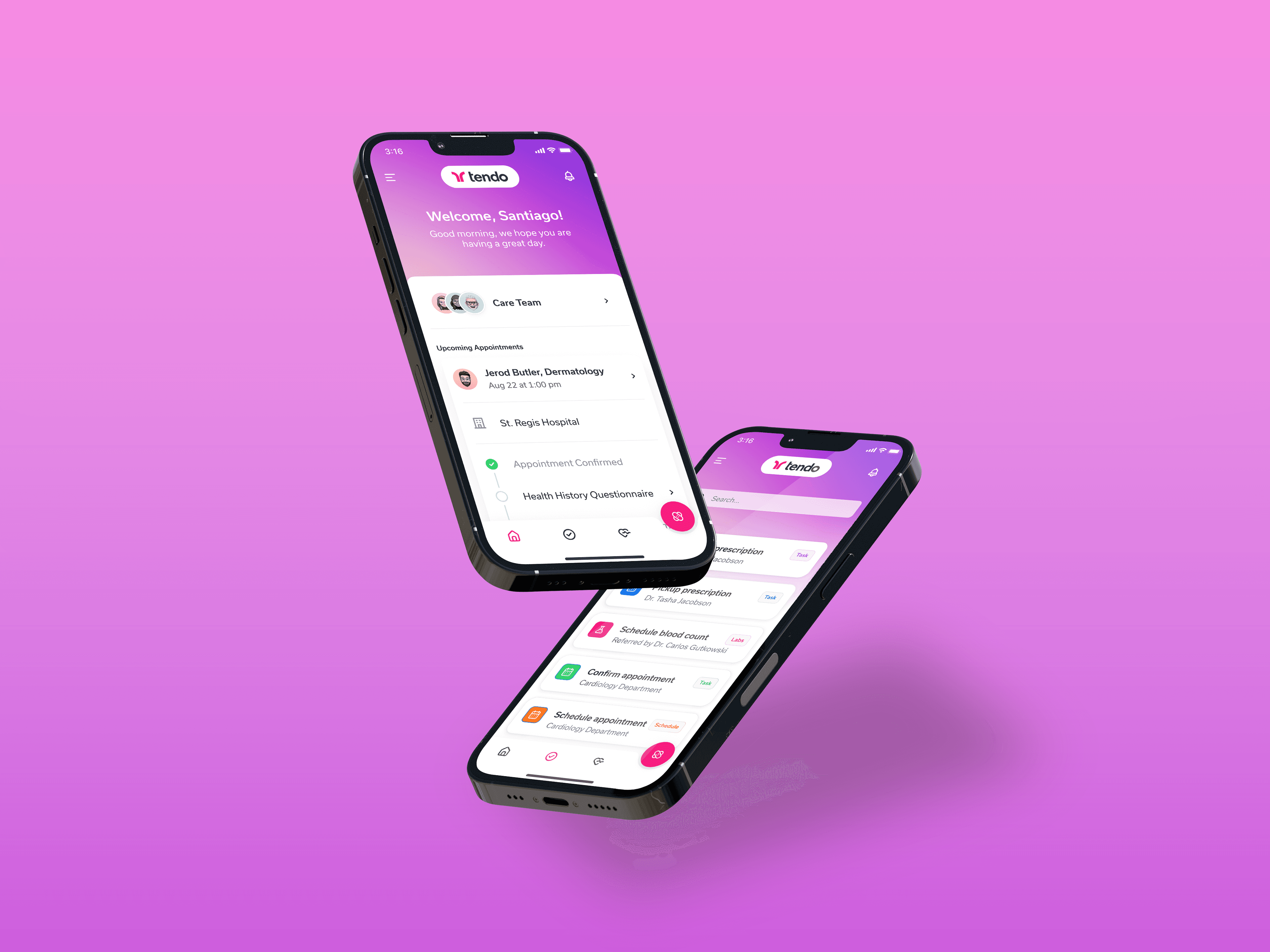
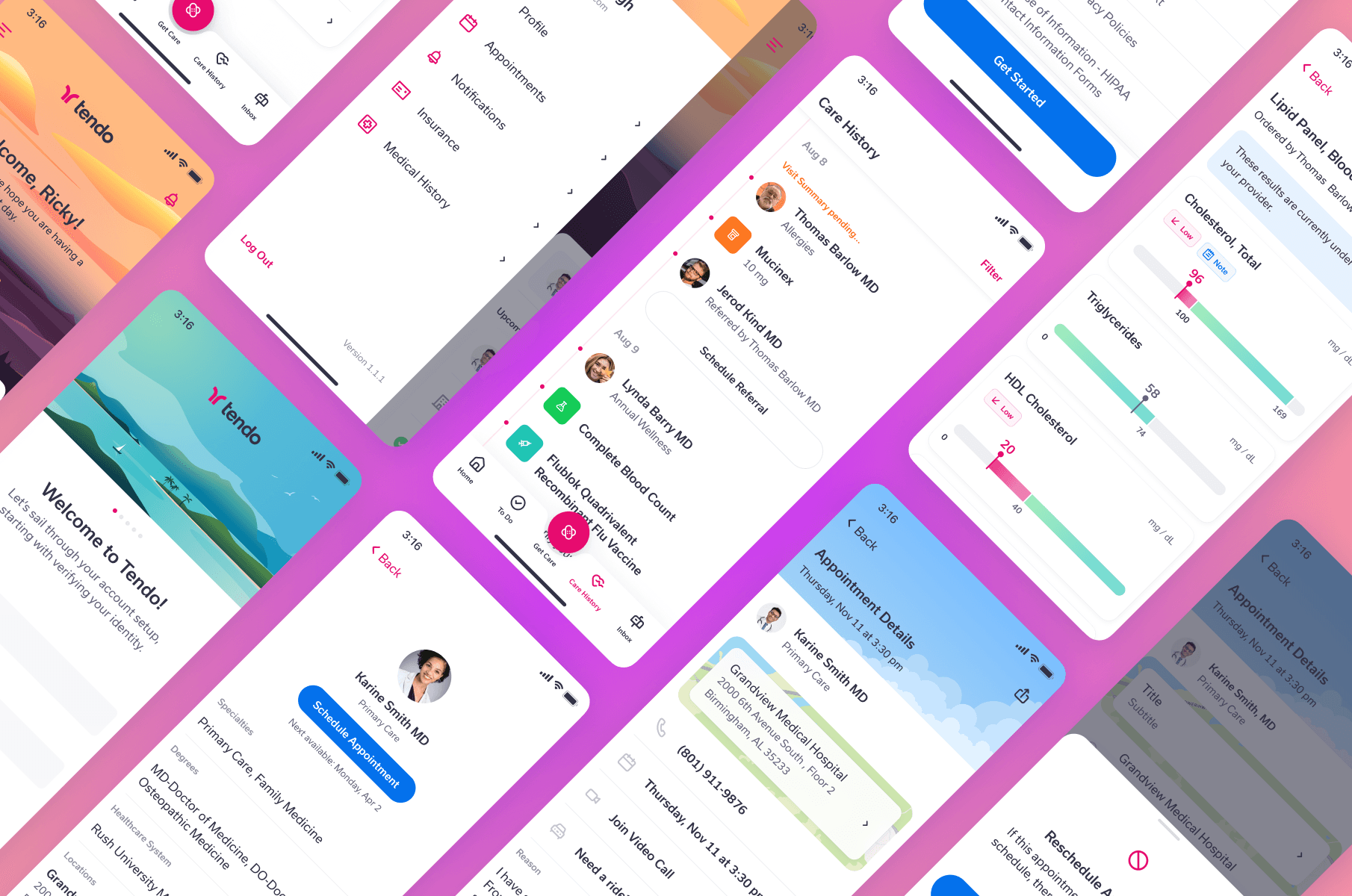
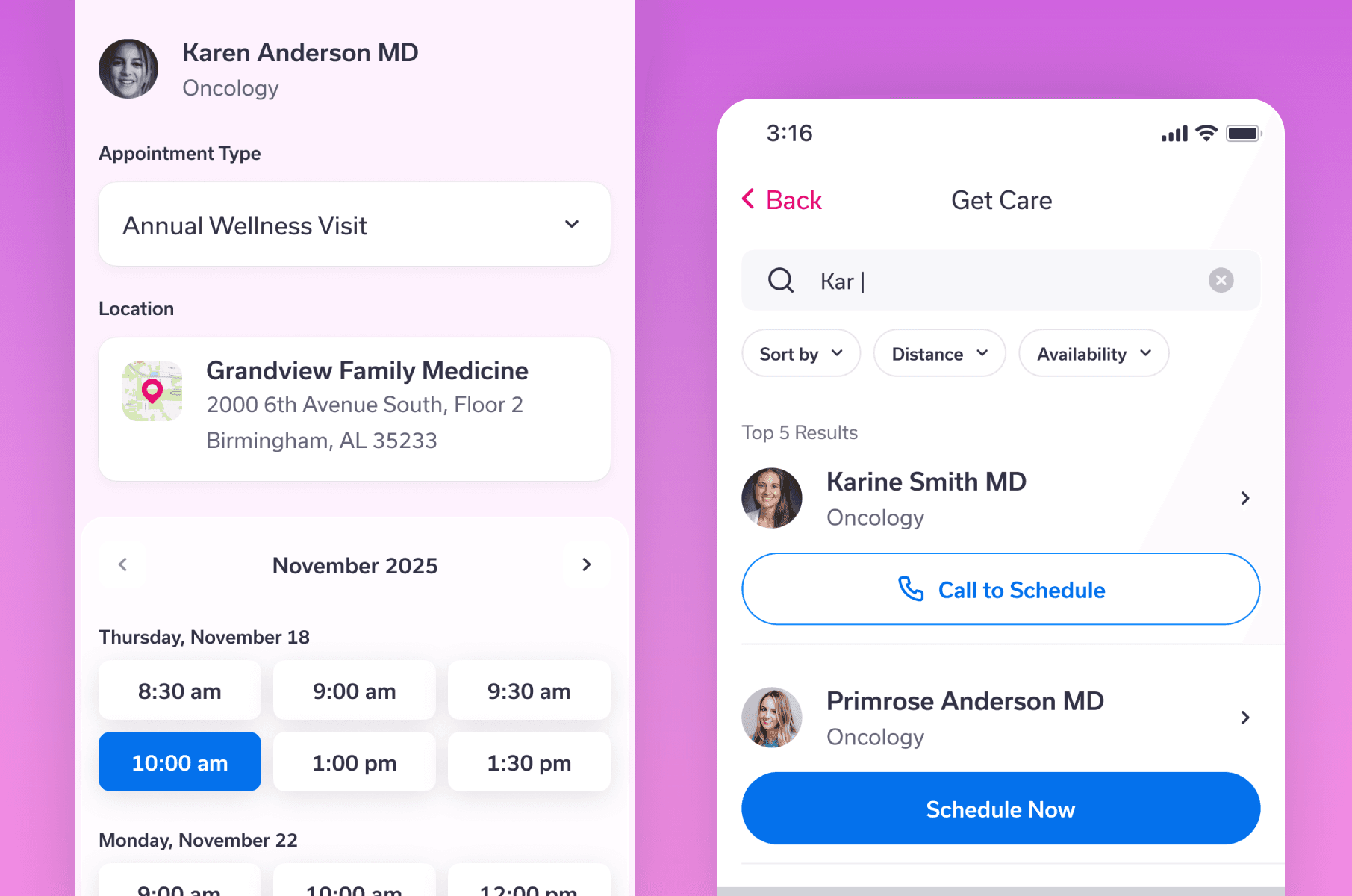
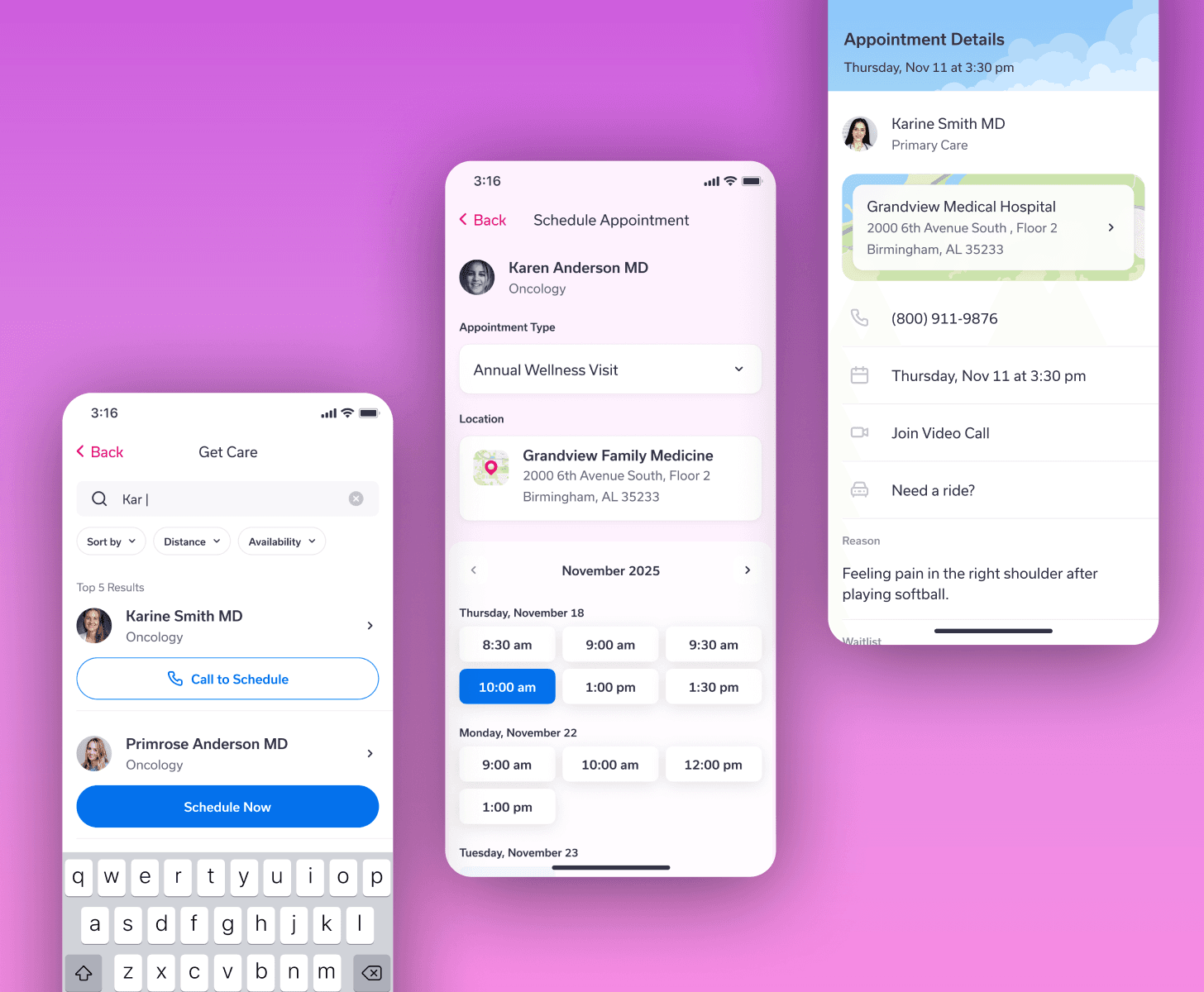
Patients recovering from surgery, and the people caring for them, had no real digital experience to speak of. Instructions, appointments, and care team messages were scattered across phone calls, paper handouts, and portals that didn't talk to each other. Hospitals wanted fewer readmissions and less phone tag, without piling more work onto staff.
I sat in on real discharge conversations and shadowed care coordinators to see where things actually broke down, not where an org chart said they should. From there I ran round after round of rough prototypes with real patients and caregivers, testing whether people could actually follow the instructions under stress. Post-surgery, often older, often not that comfortable with apps. Every round changed the flow before we built a single production screen.
This wasn't a solo design exercise. I worked closely with clinical ops to make sure care plans matched real hospital protocol, with engineering on what was actually buildable given compliance and EHR constraints, and with customer success to understand what would make a hospital administrator trust the product enough to buy it.
It became Tendo's flagship product and shipped across multiple health systems. The product line was later acquired.